
Building Connection at Scale
Zillow's zRetreat program blueprint

Today’s Work Forward is a deep dive into one of my favorite examples of thoughtful approaches to redesigning work: a how-to from the Workplace Experience leadership team at Zillow on scaling meaningful team gatherings.
Welcome Flex Index readers! This column seemed like an ideal jumping-on point for leaders looking for more insight into flexible work best practices.
Let’s get to it!
How a 7,000-person remote-first company runs over 200 intentional gatherings annually
I’ve been fascinated by companies that have mastered purposeful in-person time in a flexible work world. Too many organizations treat team gatherings like afterthoughts—last-minute logistics scrambles that leave everyone exhausted and disconnected—if they haven’t cut them altogether to save money. But what if there was a better way?
Steve Bennett from Zillow recently walked a Charter Form group through their “zRetreat” program—the most sophisticated approach I’ve seen to scaling meaningful connection. In four years, they’ve gone from occasional ad-hoc meetings to hosting over 200 intentional gatherings annually for their 7,000 employees. The results? 83% of employees attend at least one zRetreat per year, the average being two or more, with engagement scores that justify every dollar spent.
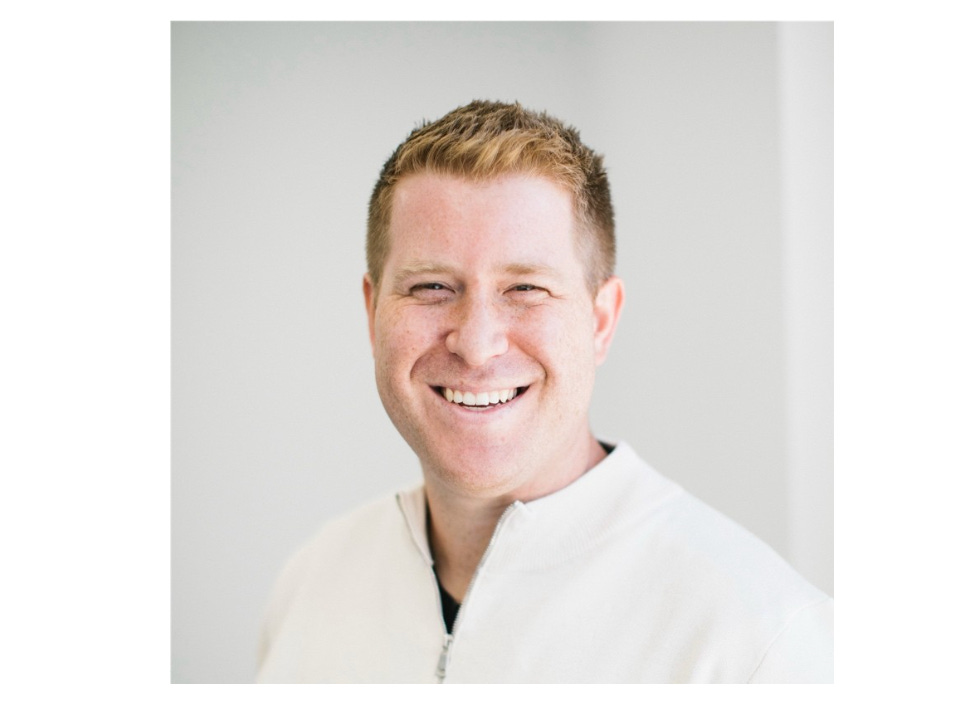
Steve Bennett, Zillow’s leader of Workplace Experience & Gatherings
Zillow’s shift has had a profound impact on their talent strategy: they’re seeing four times the number of job applications for every job, and employee engagement scores have soared to all-time highs. Better yet, their investments are paying off: 93% of survey respondents said that zRetreats help teams collaborate asynchronously in a more effective manner after they return home.
Here’s what makes their approach work—and how you can apply these lessons to your own organization.
The Foundation: Purpose Over Productivity
Steve was crystal clear about their North Star:
“We have primarily set zRetreats for connection, relationship building, and shared understanding of our goals at Zillow. You’ll notice that it does not say ‘get work done.’ That is not the purpose of why we gather. We believe that we can complete work completely remote.”
This clarity matters more than you might think. When teams know they’re gathering to connect rather than complete tasks, the entire dynamic shifts. People arrive ready to engage with colleagues, not hunker down on their laptops.
Zillow’s approach reflects a broader truth about flexible work: the average company now has as high as 80% of teams with members in different locations. Zillow operates as a “Cloud HQ:” a distributed workforce model that prioritizes location flexibility and empowers employees to do their best work from wherever they thrive.
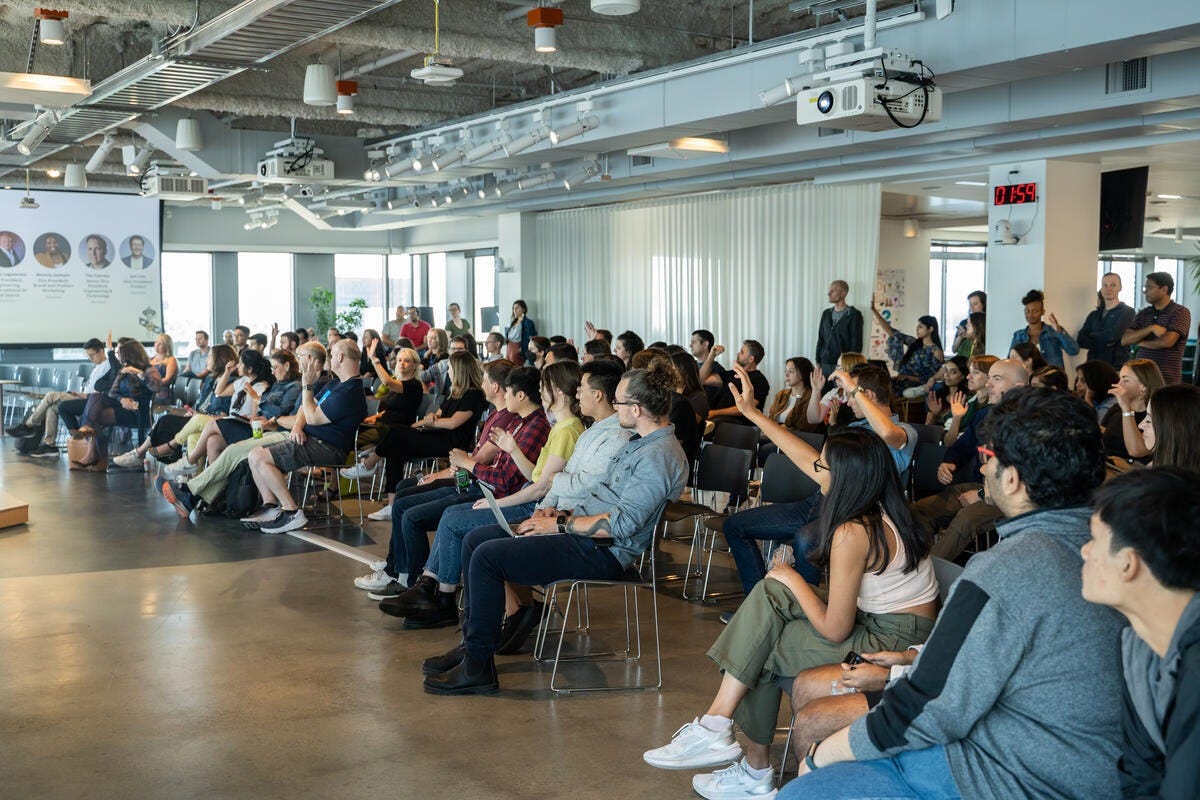
The Operating System: Structured Excellence
What impressed me most about Zillow’s program wasn’t just the scale, but the operational sophistication. They’ve built what amounts to an internal events company.
Dedicated Team Structure. Zillow has put dedicated resources against this program – not only taking the load off leaders and admin staff but also to build scalable programs. A rough outline of the team:
Manager overseeing the entire program
Four full-time planners handling logistics
Team coordinator managing recurring tasks
On-site support staff at each location
Logistics planning alone makes the program more efficient. For example, by centrally negotiating hotel room blocks on about half of zRetreats, Zillow estimates they’ll save $1.2 million in 2026.
Annual Planning Cycle. Their starting point is organization-wide alignment around the importance of gatherings, and a framework that budgets for a number of events per year based on functional groups (ex., product development and marketing) and level in the organization (ex., individual contributors through executives). Some highlights:
Plan ahead: Calendar published in October for the following year
Build for flexibility: 30% of events typically move timing or location throughout the year
Budget well: Estimates are set at a fixed amount per attendee across all events
Scope the space: Space packages pre-assigned based on group size
For 2026, the team is also launching an automated airport rideshare program: they’ll align airport rides for employees to drive savings and build new connections.
Technology Infrastructure They’ve created custom planning tools because, as Steve noted, “there is no market tool we have found currently that does a good job at helping us plan these.” Their Google Sheets-based system tracks everything from RSVPs to flight bookings to room block utilization, feeding data back and forth between their event platform and internal systems.
The sophistication here matters. When logistics run smoothly, people can focus on what they came for: connecting with their colleagues
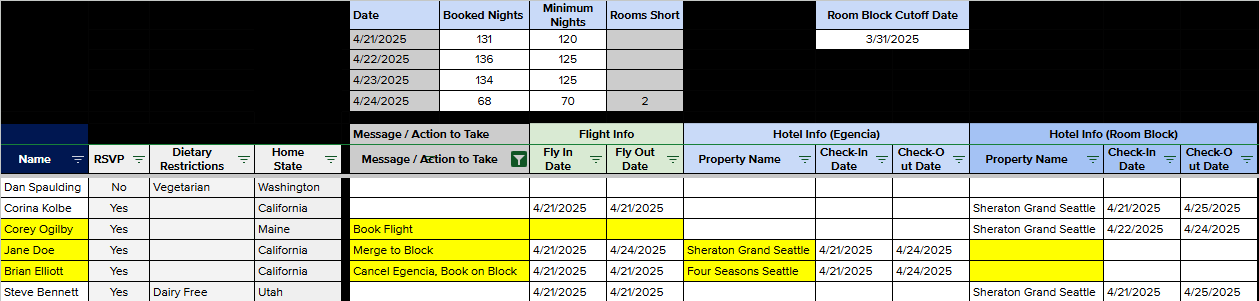
Internal RSVP/book travel flagging tool
The Experience: Start Big, Go Small
Every zRetreat follows the same proven structure: typically 2.5 to 3 days, starting with large group sessions and moving to smaller team breakouts. Monday and Friday are usually travel days (no weekend travel, period), and the agenda often unfolds like this:
Day 1 (Tuesday): All-hands sessions with company-wide themes
Day 2 (Wednesday): Mix of large sessions and focused workshops
Day 3 (Thursday): Team-specific work and smaller group sessions
This “start big, go small” approach maximizes both connection and practical outcomes. People get energized by the broader company vision, then dive deep into team-specific priorities.
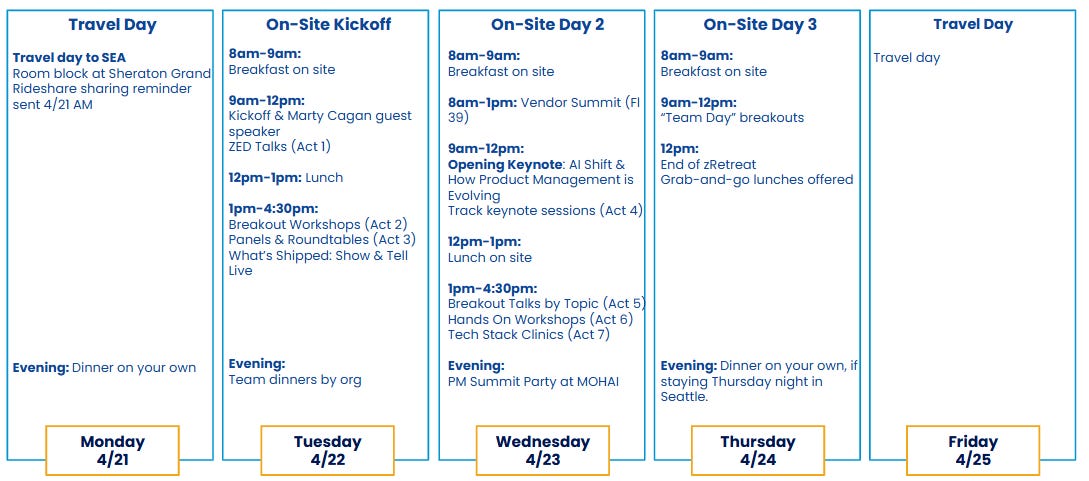
zRetreat sample agenda
The full agenda, from discussions through meals, breaks and activities, are also made easily available to attendees through content shared ahead of time, webpages dedicated to events and interactive technology and signage in their offices.
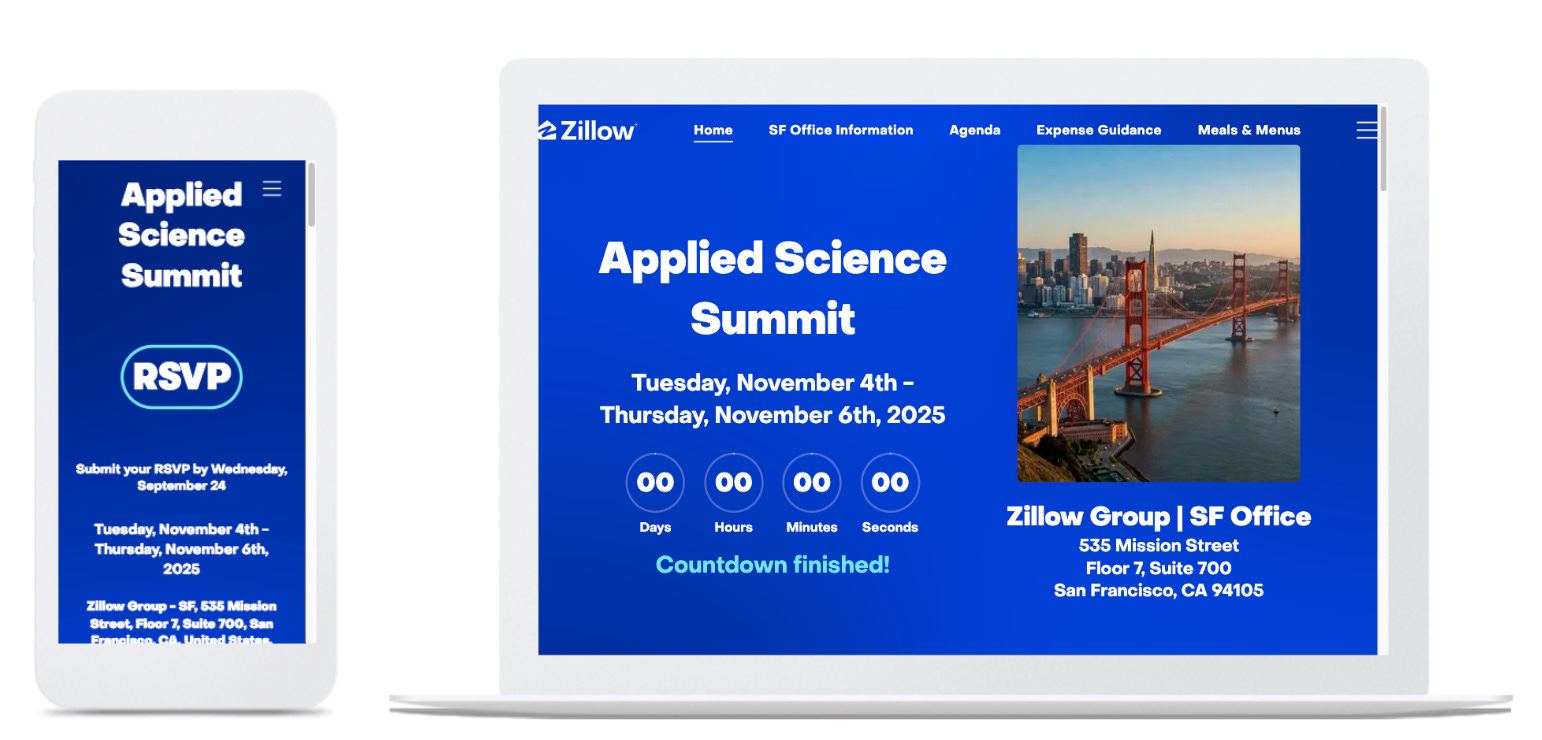
.zRetreat event webpages
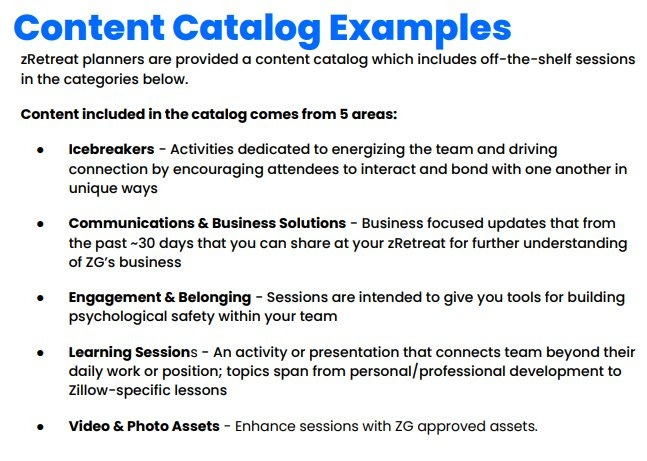
Content and Support Resources. I’ve seen this issue in many companies: most leaders look like a deer in headlights when you say “go run a day of team-building exercises.” So Zillow has put together resources to make it a lot easier—and far better:
Catalog of 50+ pre-built sessions with slides and presenter guides
Six trainer-led sessions for high-demand topics
Learning consultant and instructional designer support
“Presenting with Polish” course for nervous speakers
The content catalog is genius: it removes the burden of session creation while ensuring quality. Teams can focus on their unique priorities while plugging in proven activities for connection and skill-building.
The Physical Transformation
Zillow completely redesigned their office spaces around gatherings rather than individual work. The company reduced its physical office spaces, redesigning remaining locations and investing resources instead to support its zRetreat program.
Key changes include:
75% of office space dedicated to zRetreat activities
Pod and classroom layouts prioritized over boardroom setups
All spaces are Zoom-enabled for hybrid participation
Dedicated catering stations with pre-approved vendors
The space transformation philosophy is telling: when you know people will work from home most of the time, optimize your real estate for when they do come together.
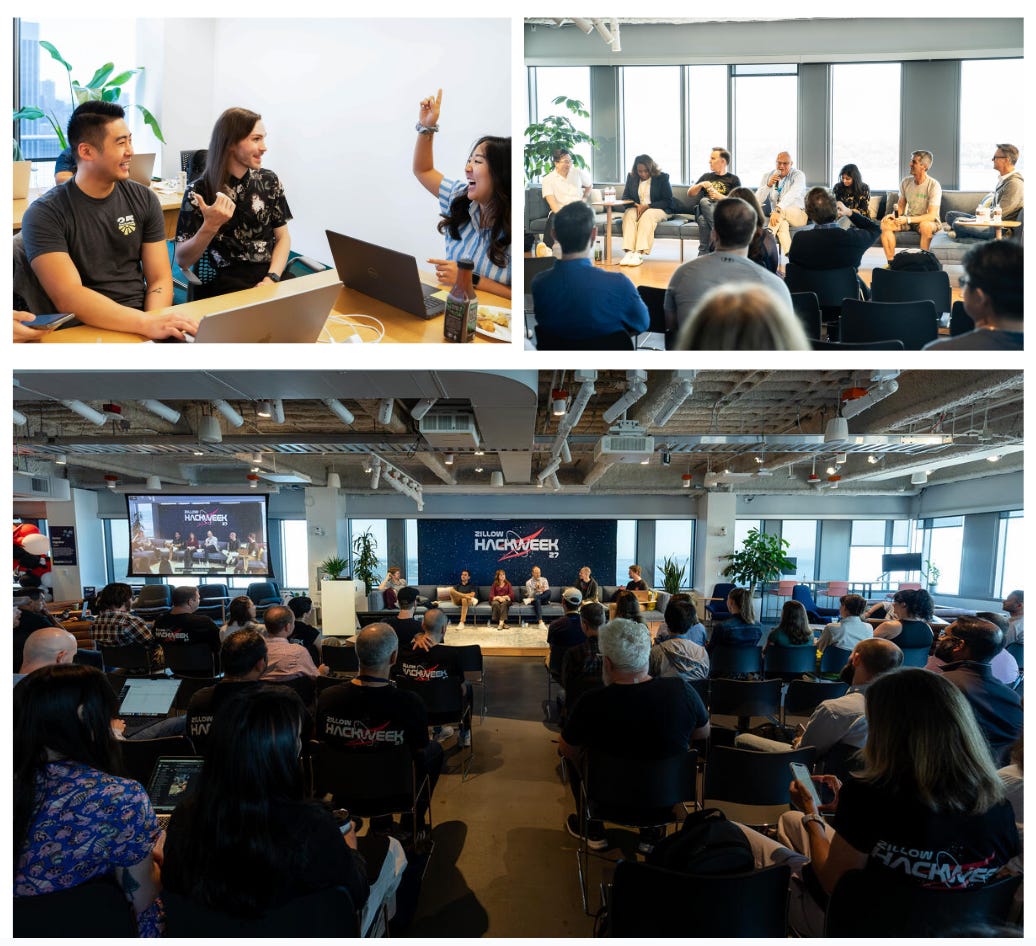
Scenes from Zillow Hackweek
The Investment Case
The financial model works because it’s replacing, not adding to, other forms of business travel. Steve’s team monitors travel carefully—only 2.5% of total company travel falls outside of conferences, sales meetings, and zRetreats. They’ve essentially eliminated random gatherings and ad-hoc business trips in favor of structured, purposeful connection.
The budget per attendee covers:
Travel and accommodation costs
Catering for all meals and breaks
Space setup and AV requirements
Off-site team dinners for larger events
The modest investments are paying off—and in both cases are more than covered by a sizable decrease in overall office space. When you’re spending less on real estate, you can invest more in meaningful experiences.
Lessons for Your Organization
You don’t need Zillow’s scale to apply these principles. Here are the key takeaways:
Start with Purpose. Be explicit about why you’re gathering. Connection and relationship-building are valid business objectives, often more valuable than trying to complete tactical work in person. Pair with deeper understanding of business goals and drivers for a true win.
Create Structure. Even small organizations benefit from factors like an annual planning cycles for team gatherings to help design intentional overlaps, clear budget parameters per team and level, and standardized logistics processes. Consistent feedback collection and measurement builds insights and improvements.
Focus on Experience Design: Limited resources can have massive impact on experience quality, and therefore team engagement. Begin with company-wide themes, move to team-specific work. Provide content resources so teams aren’t starting from scratch especially when it comes to team building.
The experience itself also matters: Design spaces (or choose venues) that encourage interaction and make logistics invisible so people can focus on connection and deeper alignment.
Measure What Matters Track engagement improvements, not just attendance numbers. Zillow monitors both event-specific feedback and broader employee engagement metrics tied to connection and business understanding.
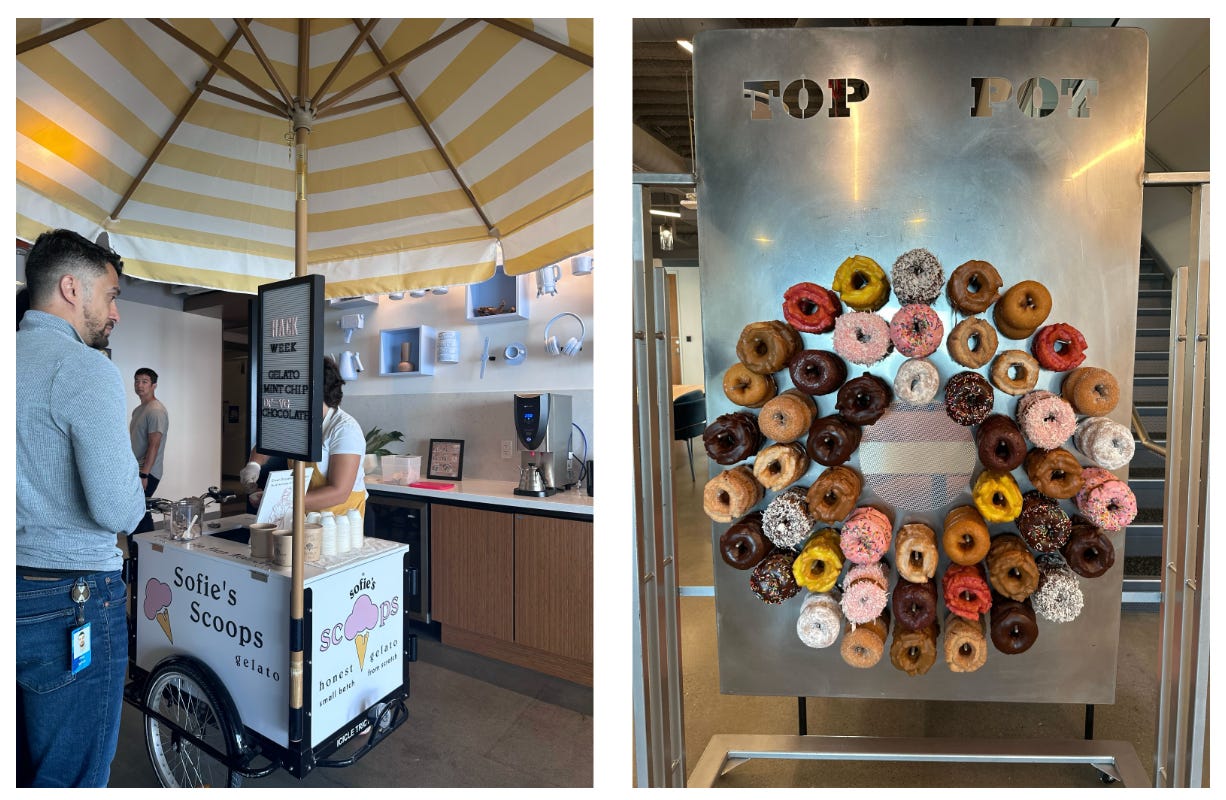
Espresso cart or donut wall: why not both?
The Bigger Picture
What Zillow has built is more than an events program—it’s a comprehensive approach to maintaining culture and connection in a distributed world. Companies like Allstate, Dropbox, and Zillow get that the “future of work” doesn’t arrive, it’s built by those who invest in making it happen.
The shift to distributed work means we can’t rely on proximity alone to create relationships. But distributed teams can be more connected than traditional office-based ones ever were: Atlassian’s data shows a 27% boost in engagement lasting four to five months for those gathering quarterly versus chance meet-ups in offices.
The question isn’t whether your people need connection—they absolutely do. The question is whether you’re willing to invest in making it happen systematically, rather than hoping it emerges organically.
As Zillow’s Cloud HQ approach proves, when you get the system right, the results speak for themselves: higher engagement, stronger relationships, and a culture that thrives regardless of where people happen to work.
Not sold yet? Zillow’s Chief People Officer Dan Spaulding points out that Zillow’s employee engagement and digital-first approach is also helping them excel when it comes to AI: they’re ready to lead the next generation of change, instead of fighting over days in office.
What’s working in your organization that others can learn from? Drop me a line!
Related Readings
Flex companies lead in AI: How Zapier has moved from being a remote-first leader to an AI adoption leader in 2025—and plans to lead in AI transformation in ‘26.
Your meetings (still) mostly suck: 32% of people spend most of their week in meetings, half of which are a waste. Flex Index & Dropbox teamed up on some research!
Hybrid Work Isn’t the Problem, Leadership Is: would Stanford’s Nick Bloom, LSE’s Raj Choudhury and I lead you astray? Nope. Chock full of the latest data & case studies.
Coming in from Flex Index? Check out…
The Missing Leg of Employee Experience: Why the conversation about HR & IT needs to not leave out Workplace.
Microsoft Gets It Right: At least for Microsoft! How their approach to return to office differs, and why data matters.
When Academics Ignore Research (and Reality): Sometimes, HBR prints something that’s just dead wrong. I wrote back.
Did something similar in my previous career. Because we were global we did offsites only in the spring and autumn. Being an organization of more than 3000 people we had to limit participation to local manager +1. And +1 should preferably be
somebody up and coming and also change every time.
Love this - wonderful example of building culture systems tied to business metrics, and how to put operational thinking behind development of culture as a strategic asset.