


AI hype, workplace fiction, and trade deal theater — we're being sold stories. Let's unpack what's actually true, before they fire all the truth-tellers.
First, some backstory. When I was 18 and a freshman at Northwestern, I got invited to data nerd heaven: a small program called Mathematical Methods in the Social Sciences – a home for stats geeks who loved digging into real-world problems and ripping apart headlines to get at the root causes using data.
Fast forward to today, and we're living in a world where headlines are louder than ever, often driven by people with very loud voices — and very specific commercial interests. There's more spin, more hype, and a growing disconnect between what's being said and what's actually true.
This isn’t a column about President Trump. Except, of course, we’ll have to talk about President Trump.

Three big recent claims caught my attention. Let me walk you through what the data actually shows.
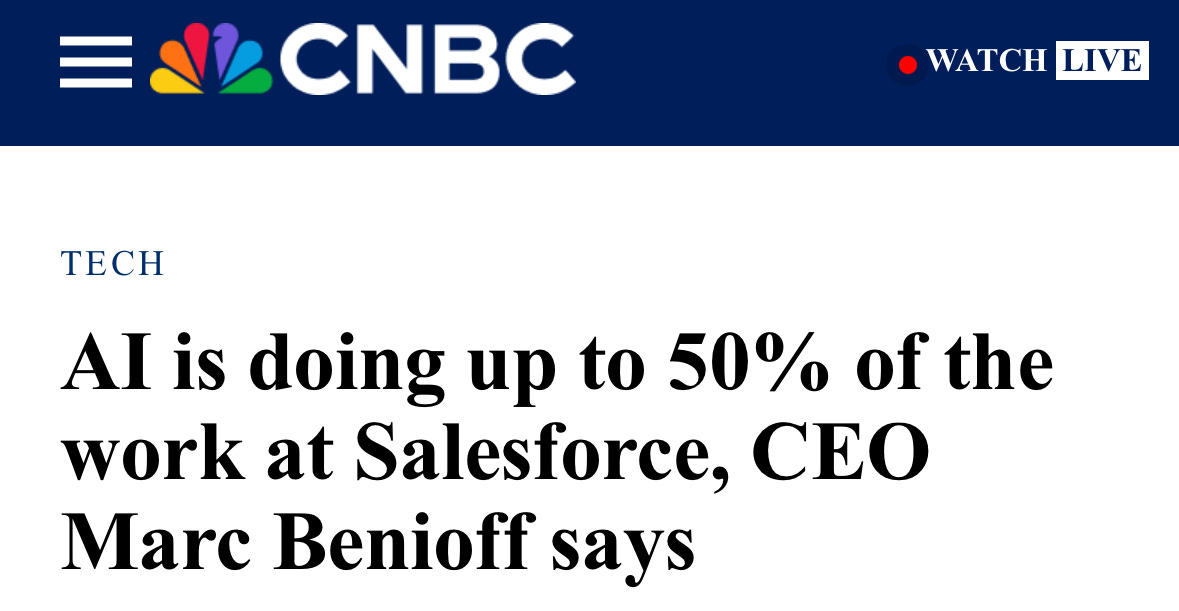
Claim #1: AI Is Doing 50% of the Work at Salesforce
Not a chance.
A couple of weeks ago, Salesforce CEO Marc Benioff made headlines claiming that AI is doing 30 to 50% of the work at Salesforce. I'm pretty confident he didn't mean it literally – and undoubtedly misunderstood or exaggerated a stat someone gave him. But Marc, the P.T. Barnum of the software world, was doing what a lot of AI arms merchants are doing these days: selling.
It's not hard to poke holes in the claim. If AI were truly doing half the work at Salesforce, the company would be cutting headcount dramatically faster than it is. Instead, like all the Big Tech players, they're steadily tightening the screws: ratcheting up output expectations, trimming around the edges, and pushing for higher earnings while selling a lot of sizzle… and maybe a little bit of steak.
What is working? That's the better question. And it has real answers.
If you want to see what practical AI implementation looks like — without the hype — check out the story of Lauren Franklin, who leads customer service at Zapier. She didn't lay off her team. She gave them better jobs. She paid them more. And she used AI to redesign an entire function that's often treated as expendable.
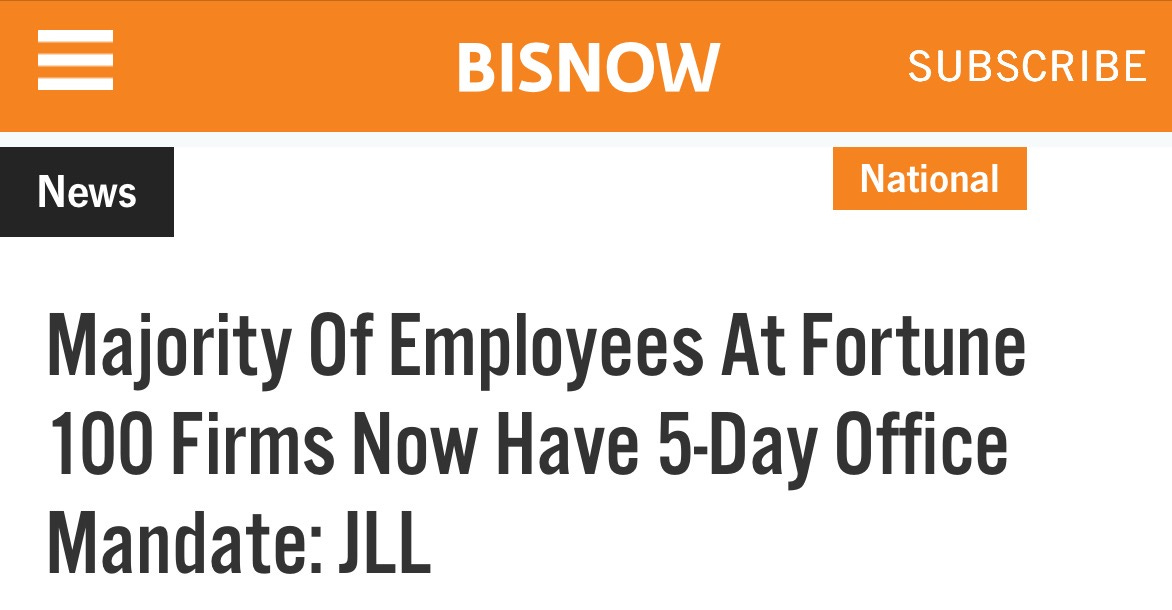
Claim #2: 50% of the Fortune 100 Are Back in the Office Full-Time
Not even close.
This headline has been making the rounds, thanks to a handful of reporters misinterpreting — or generously quoting — a questionable piece of marketing from JLL, the commercial real estate firm. I've talked to folks at JLL, and also to Nick Bloom at Stanford, who's spent decades studying this stuff.
It’s not hard to fact-check this. I’m the Publisher of the Flex Index: we track the workplace policies of >8,500 US-based companies and publish quarterly reports on who's doing what. You can just go to Flex Index and look up the Fortune 100 for yourself.
Here's what the actual data says:
29% of the Fortune 100 currently have five-day, in-office mandates
>70% are flexible, the majority are hybrid, 35 of them have 3 days a week policies
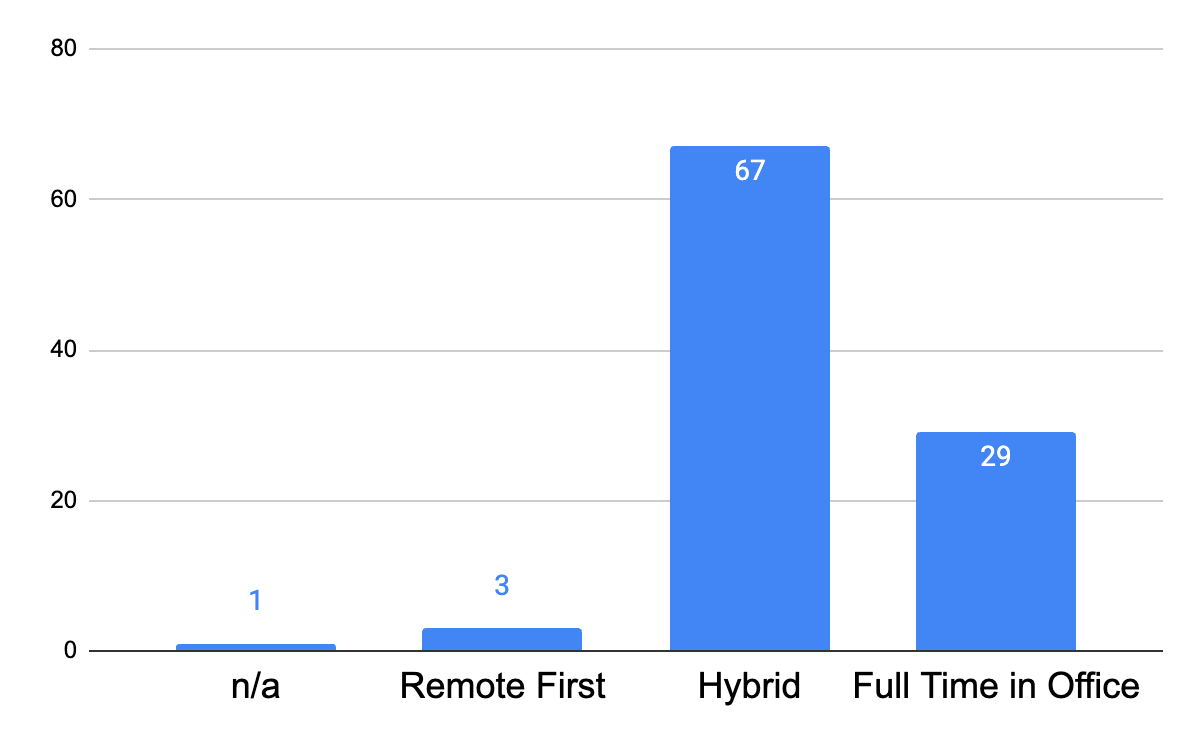
Flex Index data on Fortune 100
So how did JLL get a majority? In their defense, the researcher behind the claim clarified that they meant 50% of employees at Fortune 100 companies are back in the office full-time. But there's a problem with that too: what’s the source for accurate numbers for office workers across the Fortune 100?
Stanford professor Nick Bloom has been trying to get it for a couple of decades. He says it doesn't exist in a clean, standardized form.
If you look at all employees, it’s easy to get to 50%: just three companies — Walmart, Amazon, and UPS — employ over half the people in the Fortune 100. Most of those jobs were never remote in the first place.
So here's the actual story:
Yes, the Fortune 100 is tightening its grip on in-office work
The broader Fortune 500 is more mixed, with fewer companies going fully mandatory
Among companies with fewer than 500 employees, 70% are fully flexible — meaning no formal policy at all
Why? Because most small and midsize businesses have better things to do than argue about badge swipes and butts in seats.
Claim #3: We Have Trade Deals and a Great Jobs Market
Well… we have press releases. And a jobs market that's steadily weakening.
Let's start with the "trade deals." A press release announcing a tariff – with unclear details about what’s affected – isn't a trade agreement. Press releases that tout $350 billion, $550 billion, or $750 billion dollars in investment coming to the U.S. over the next 10 years? Those aren't agreements. They're just numbers – printed without co-signatories, context, or accountability.
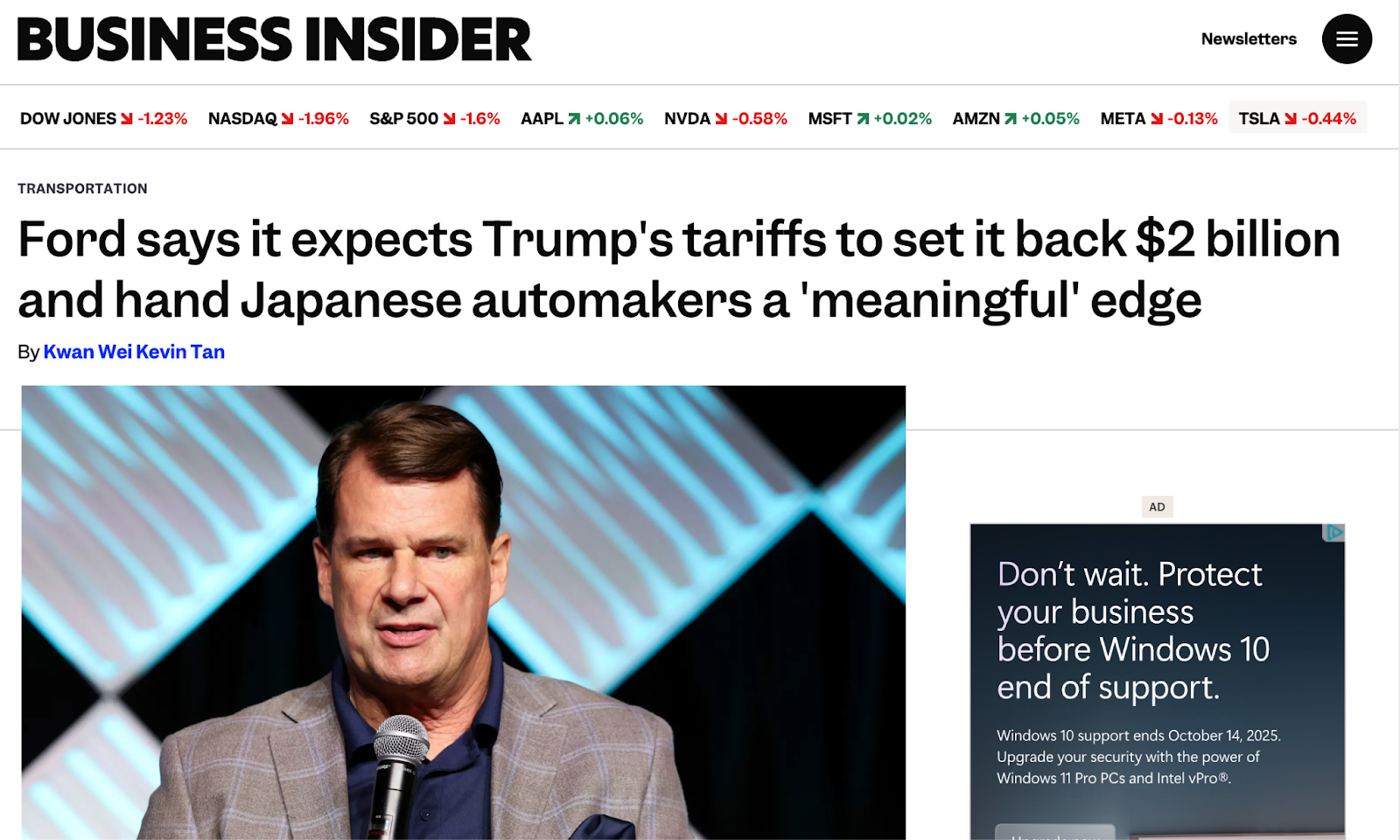
Companies know this. They don’t like uncertainty, and certainly can’t plan around tariffs that are likely to be found to be legally indefensible. Worse, the impacts often are contrary to US interests: just ask Ford and GM, who have announced $1-2 billion hits to their bottom lines as they absorb the cost of tariffs in the short term – and become less competitive versus global players long term.
While all that chaos unfolds, the job market is deteriorating. Anyone in it will tell you. The Bureau of Labor Statistics will tell you. Even if you don't like their monthly downward revisions, those revisions are entirely predictable.
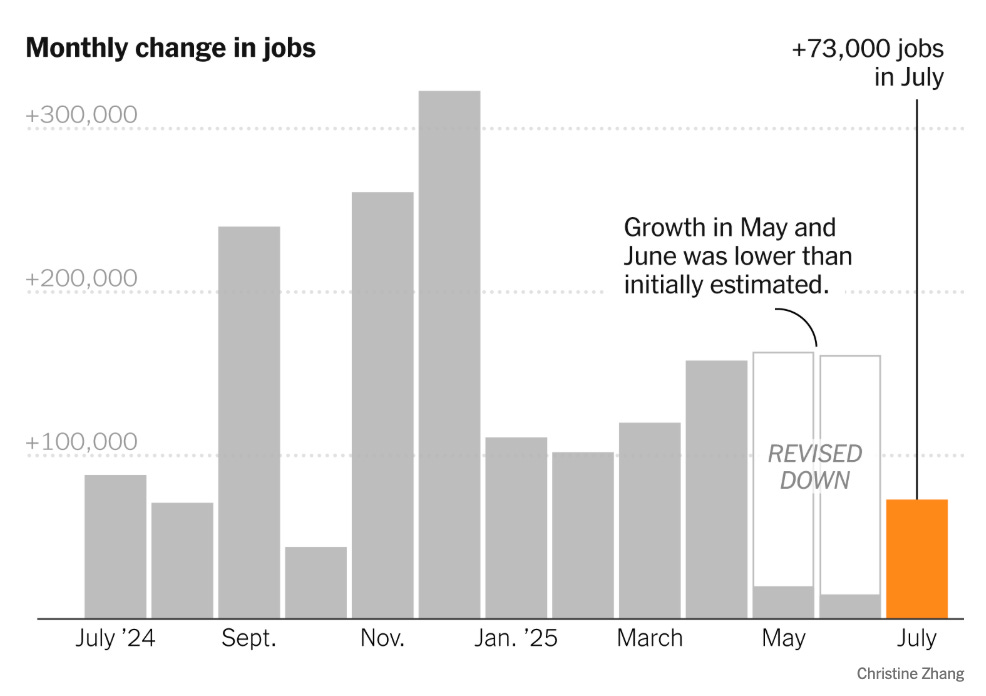
President Trump, disliking the numbers and hating revisions now that they’re on his watch (he loved them in the fall), took the route of an Emperor without clothes: he fired the truth-teller: “In my opinion, today’s Jobs Numbers were RIGGED in order to make the Republicans, and ME, look bad,”
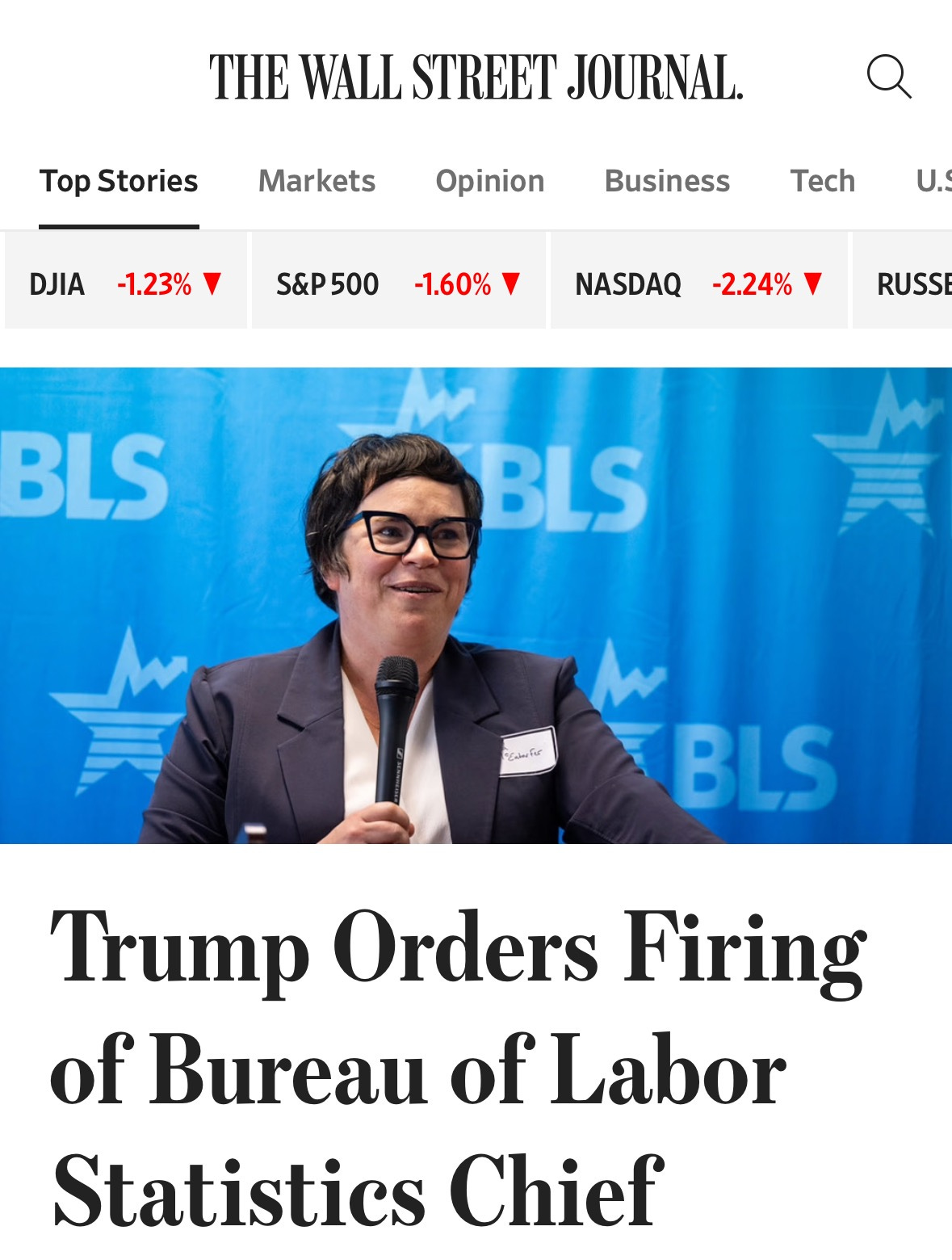
Emperor fires accountant for correct accounting
It’s not that hard to understand downward revisions: Bloomberg has covered it extensively. Basically, if you have to publish a number the first of the month, you don’t have all the data. The gaps when the market is heading down tend to result in the number later go further down. Companies that go out of business, hiring that didn’t happen.
Also, ADP has been reporting weakness in the private sector for months. Last I checked, the President can’t fire an entire private-sector company that runs payroll for 25 million private-sector employees. But he might try to silence them too.
What’s next? In uncertain times, businesses respond in predictable ways:
They pause hiring
They slow investment
They lay off who they can
They wait
And that, friends, is how recessions happen.
The Post-Truth Economy
So we’ve got AI sizzle merchants, workplace policy wishful thinkers, and the tariff-wielding dealmaker with questionable deals, inflation, and a job market that’s headed south. All standing proud. All without clothes.
And here's the kicker: they're connected. We're sliding into a post-truth economy. The media is fragmented. Attention is splintered. Walter Cronkite is not coming back – and if he did, he'd probably be on TikTok.
What Leaders Can Do
In a world of competing narratives and manufactured urgency, here's what actually matters:
Focus on your own data. Don't base major decisions on headlines or competitor moves. Look at your actual productivity metrics, retention rates, and employee satisfaction scores.
Test before you scale. Whether it's AI implementation or workplace policies, pilot programs beat mandates every time. Let teams experiment and share what works.
Communicate clearly. Your employees are drowning in noise too. Be the voice of clarity and consistency they can trust.
Plan for uncertainty. The one thing we know for sure is that the landscape will keep shifting. Build resilience, not rigidity, into your systems.
If this resonated with you, please pass it on — to friends, to colleagues, to anyone who's trying to make sense of the noise. And if you disagree? Even better. I want to hear from you.
Feedback? Ideas? Reach out! I'm brian@workforward.com
Thanks for an absolutely brilliant, clear-eyed view on the BS headlines, Brian. I appreciate you finishing it off with actionable advice. And my favorite line is definitely “Walter Cronkite is not coming back – and if he did, he'd probably be on TikTok.” If only…