

Ferrari in the jungle
The friction was always there. AI just made it impossible to ignore.

“Putting AI into our development team was like dropping a Ferrari in the jungle.”
That’s how one Chief People Officer described what happened when her engineering org started shipping at three times its old pace: accelerated code development, but no real change in product momentum or revenue. The engine roared, but the rest of the company couldn’t move that fast.

Many AI rollouts work this way: They speed up a single step in a long chain. A developer writes code faster, which is real and worth having, But code isn’t a product, a product isn’t a launch, and a launch isn’t revenue. Speed up one node and leave the rest of the system where it was, and you get a faster collision between functions, not a faster company.
The harder part is changing everything around engineering. A Chief Product Officer described how her team had accelerated new product development, but the commercial engine was nowhere near ready. Salespeople more uncertain about AI than their own customers, and senior leaders who weren’t in the tools at all.
“They’re not afraid, they’re just frozen by the uncertainty and the pace of what’s coming at them. It’s making visible the gaps in the ability to lead people through continual change.”
“The bottleneck was never the code”
That’s one of the most accurate blog titles I’ve read lately. Software, the author argues, is what’s left over after a group of humans finishes negotiating about what the system should do. Now that agents have made writing that code cheap, we’ve lowered the water level and can see all the rocks.
The bottleneck moves from the people writing code to the people deciding what code should exist, and from there to harder questions: Is it in service of a product someone actually wants, and can the rest of the value chain (marketing, sales, and support) keep up?
The hard part: leadership
Too many leaders are skipping the part that they own: Committing to which of fifty ideas become three real priorities. That involves hard conversations, killing off pet projects, and being willing to say “no” (or at least, “not now”). Instead, too many leaders reach for the reflex they know: just do more.
Here’s the pattern I keep hearing, almost verbatim. A boss under pressure from above decides the ten-day project should take three. A senior exec vibe-codes a front end over the weekend and concludes the rest is easy, with no feel for the years of customer customizations, the security surface, the scale requirements, and the load-bearing complexity the demo skips.
“Tokenmaxxing” may be past its peak as a flex, but the pressure it created hasn’t. The number on the dashboard still has to climb.
That fear of not maxing out what my team can do has caught me plenty of times over the years. We’re 50% bigger, shouldn’t we be able to do 50% more? The tooling keeps getting better, why isn’t throughput climbing to match? I’ve been on the receiving end of it too, which is what taught me what continually maxing out costs.
Call it the redline reflex: the instinct to keep every resource pinned at maximum. But engines, and teams, are built to run below redline, and the slack is what keeps them from breaking down.
“I’m amplified, but my brain is rotting”
That line comes from the Lenny’s Newsletter survey of nearly 6,000 tech workers, and it captures where the pressure lands.
You’d assume that after two years of layoffs, job loss would top the list of worries. It doesn’t. Only 22% worry about “losing my job to AI.” Far more worry about being expected to do more for the same pay (51%), getting trapped in an unsustainable pace (46%), and the quality of their work slipping (41%). The squeeze is exactly what the “just do more” reflex produces, now measured across an entire industry.
The workforce is splitting as it absorbs the change. Nearly half (49%) feel AI is amplifying their careers, 27% say it’s redefining their work in ways that aren’t clearly good or bad, and 19% feel destabilized or, worse, diminished.
Even amplification comes with a catch. Across everyone, significant burnout rose from 45% to 56% in a single year while career optimism fell from 55% to 49%. As one “amplified” respondent put it, they are
“Amplified and destabilized at the same time. We just set a new denominator for the job. And it moves higher and higher every month.”
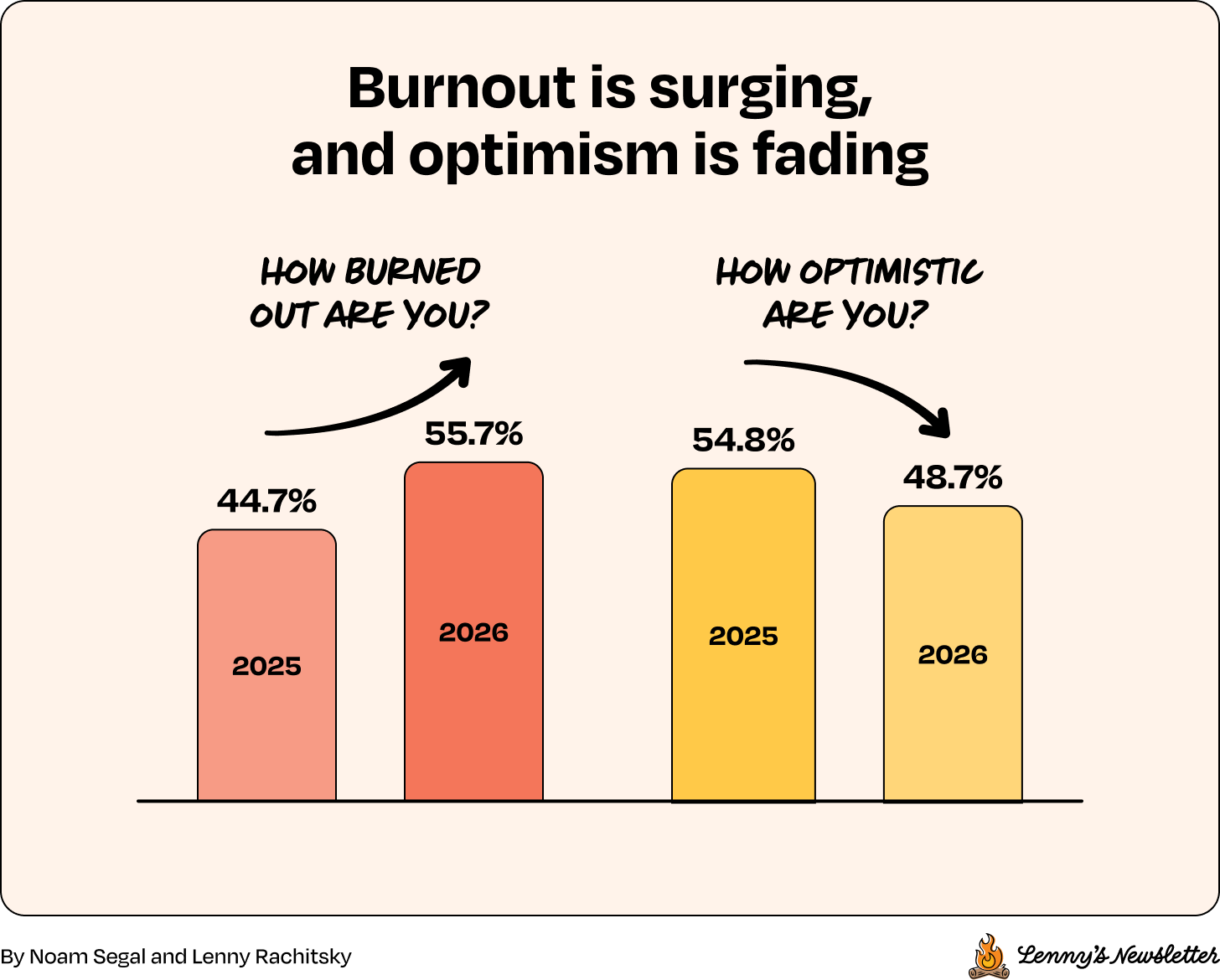
Source: Lenny’s Newsletter survey 2026
Big companies, of course, have it worse: people at 5,000-to-10,000-person firms are far likelier to be burned out than those at startups (65% versus 42%). None of that will surprise anyone who has worked in Big Tech lately. The glory days are long gone, and so is almost any internal sense of hope.
It’s not just their company they’re uncertain about, it’s their career: 53% wouldn’t recommend their own career path to someone starting out, worst of all among designers and researchers. As one respondent put it,
“I’m lucky I’m later in my career. AI can augment what I’ve built. I won’t be in a position to hire and mentor new PMs, but I’ll be safe. Which feels really crappy to say.”
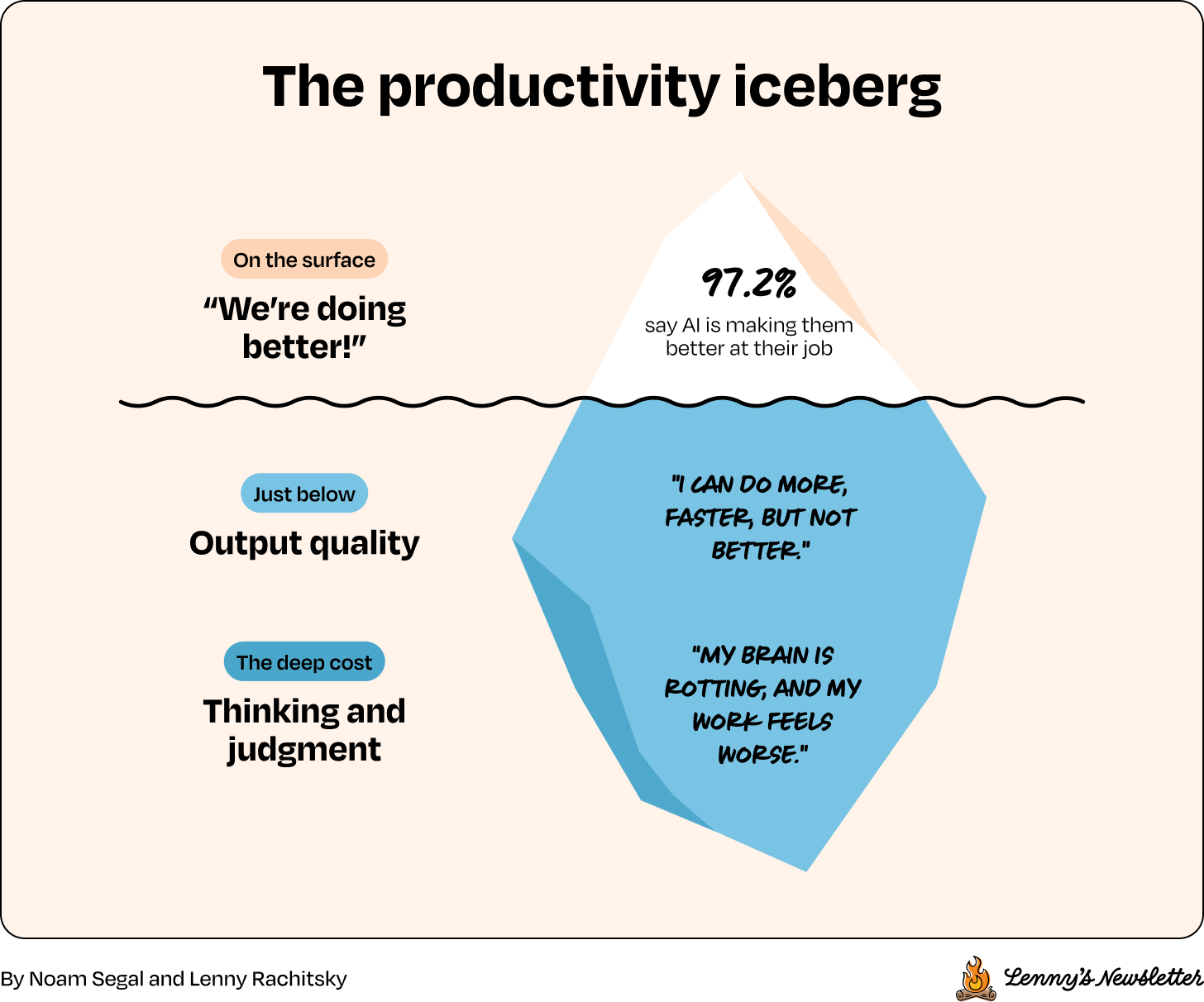
The cost shows up in the work itself, which leaders miss when they only watch velocity. AI is making tech workers better at their jobs: 82% say it’s moderately or better improving their capabilities. But at the same time, quality becoming far more questionable.
“More and more work is being handed off to me because I can use AI to get it done. But that makes it impossible to keep up with quality standards and not burn out.”
Short term gain, near term pain
The cognitive overload in BCG documented in AI Brain Fry shows up throughout Lenny’s report: “a striking number of people described their focus, their judgment, and their thinking as suffering.” That creates real risks. People AI brain fry were 39% more likely to make major errors that impact safety, outcomes, or customers.
They’re also 39% more likely to want to quit. Kyle Decker wrote about quitting tech, and one scene stuck out: an engineer adds 12,000 lines of code and asks that it be reviewed and merged the same day. A “swarm” of AI agents does the review, the code ships, and no human has read the full set of changes.
Decker’s word for what that produced was grief. The point of a code review was never just clean code, he notes. It was the institutional knowledge two people build while they argue about it. Friction is a feature: It teaches, tests, and drives alignment.
Leaders can feel it coming. In a June BCG survey of 70 CEOs, half already see core skills atrophying as their people outsource thinking to AI, and 60% expect de-skilling to be a material threat within three to five years, most of all in the capabilities that matter most: judgment, problem framing, and creative thinking.
Good managers for the win
What actually works is leadership. For the umpteenth time, Lenny’s data lands where so much other research has: good managers make a material difference. Workers with an extremely effective manager report roughly 65% higher job enjoyment and dramatically lower burnout than those with an ineffective one.
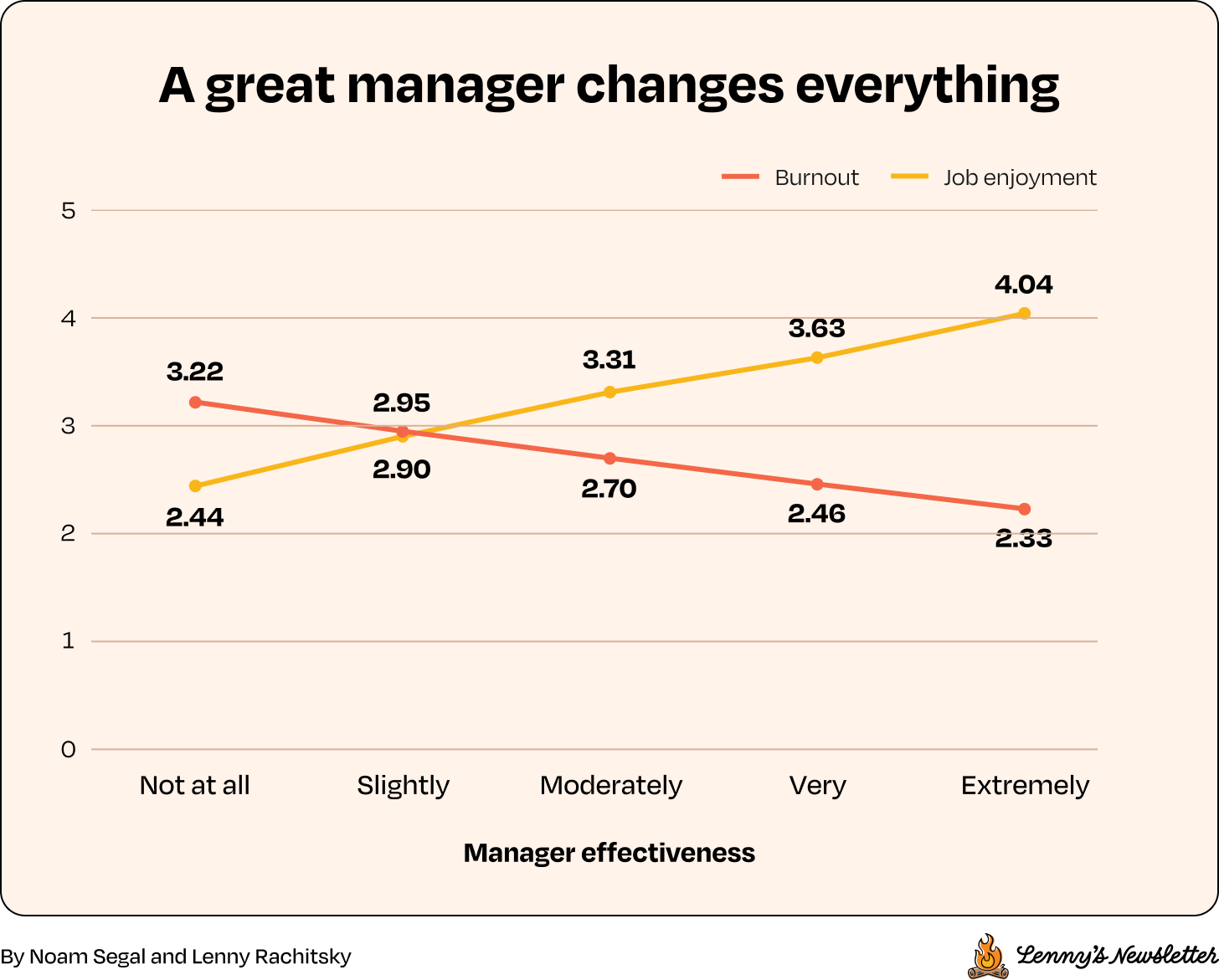
Only a quarter of workers rate their manager as highly effective, which is why Lenny’s puts the same recommendation to executives for the second year running:
“Invest in managers. It’s still the best money you’ll spend.”
The research and surveys point to a new Doom Loop: speed up the visible, measurable node, pile the pressure on the people downstream, and call the added output productivity while quality and skills erode.
The reverse is deceptively simple, but requires discipline and an understanding that successful approaches are human-led, AI-enabled. Treat debate as necessary and safe. Drive to clarity across the organization, and get ruthless about what not to build. Spend the AI dividend on judgment and good management instead of raw velocity.
The Ferrari is real. Whether it gets anywhere depends on whether leadership invests the time to agree on where it’s going, or just keeps flooring it into the trees.
Have you caught yourself in the redline reflex (or been caught in it)? What pulled you back?
Like Work Forward?
Work Forward is weekly, free, and rooted in research and real-world case studies for leaders who want work to be better for the humans doing it. The most helpful thing you can do is put it in front of one person wrestling with these same calls.
Please like ❤️, subscribe 📨, and (most of all) share 🔄
🔆 Special offer 🔆
Join me for “Built for People: How to Design Work and Workplaces to Unlock Potential” on Wednesday, July 15th at 9am PT / noon ET!
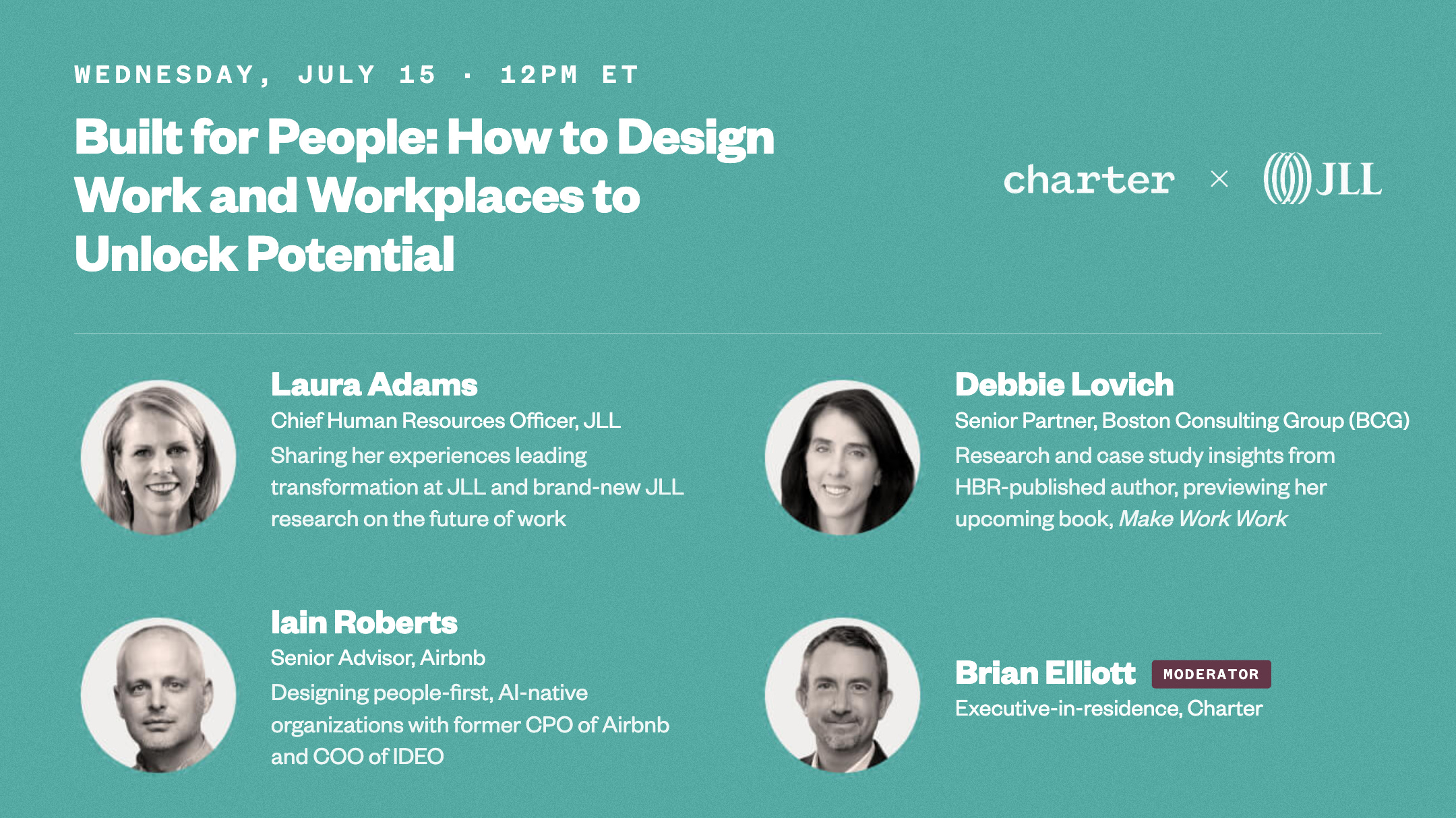
I’ll be moderating a conversation JLL CHRO Laura Adams, BCG’s Debbie Lovich, and former Airbnb CPO and IDEO COO Iain Roberts.
We’ll be digging into reshaping roles without freezing your people, how to lead through massive change, and the impact of AI on people. We’ll also get into brand-new research from JLL on how AI is reshaping how teams use workplaces, and workplaces themselves. All that and live Q&A!
Related reading:
What AI’s impact on engineering tells us about where org design is headed
The headline story had been that AI is going to hollow out engineering. That version is more dramatic and generates clicks, but the hiring data show software engineering postings have risen. That’s the Jevons paradox at work: when code gets cheaper to write, you get more software, and more demand for engineers to shape it.
As the constraint shifts, the challenges within product development organizations show up. Systems thinking and organization design become critical skills. Check out what I learned from tech leaders doing the redesign work in Charter.
Thanks for this. The "bottleneck was never the code" framing holds even inside the function AI most obviously speeds up: a GitLab study of over 1,500 developers this month found 78% code faster with AI while overall delivery speed stayed flat, the exact pattern you’re describing, playing out in engineering itself. The difference is being absorbed by review: a Faros analysis of 22,000 developers found close to a third of AI-generated pull requests merging unreviewed, and a separate synthesis of developer-tooling data puts code generation running roughly 10x faster than review capacity. The bottleneck didn’t disappear when AI sped up the writing; it just moved one layer down, from generating code to verifying it.