

Culture eats AI for breakfast
The CEOs slashing humans to capture AI savings are cutting their only durable competitive advantage.

Like Work Forward? Please like ❤️, subscribe 📨, and (most of all) share 🔄
News to confuse, from last week: Meta cut 8,000 jobs, MetLife increased entry-level hiring by 30%, and Pope Leo XIV published a 42,300-word encyclical warning that “the pursuit of greater profits cannot justify choices that systematically sacrifice jobs.”
Anyone who claims to know how AI will impact work and society at any level of precision is delusional or selling you something. Sam Altman softened his tone last week, chalking up his earlier predictions to intuition. I don’t know where this lands either, but the more I work with teams and read the research, the clearer it gets: human-led, AI-enabled gets you further, faster.
I argued in The Tokenmaxxing Trap that mandating AI usage is a strategic dead end, and sure enough Amazon’s employees are already cheating the system.
The CEOs focused on cutting first may be making a bigger error. The assumption isn’t just that downsizing is a winner; it’s that successful transformation starts with cuts.
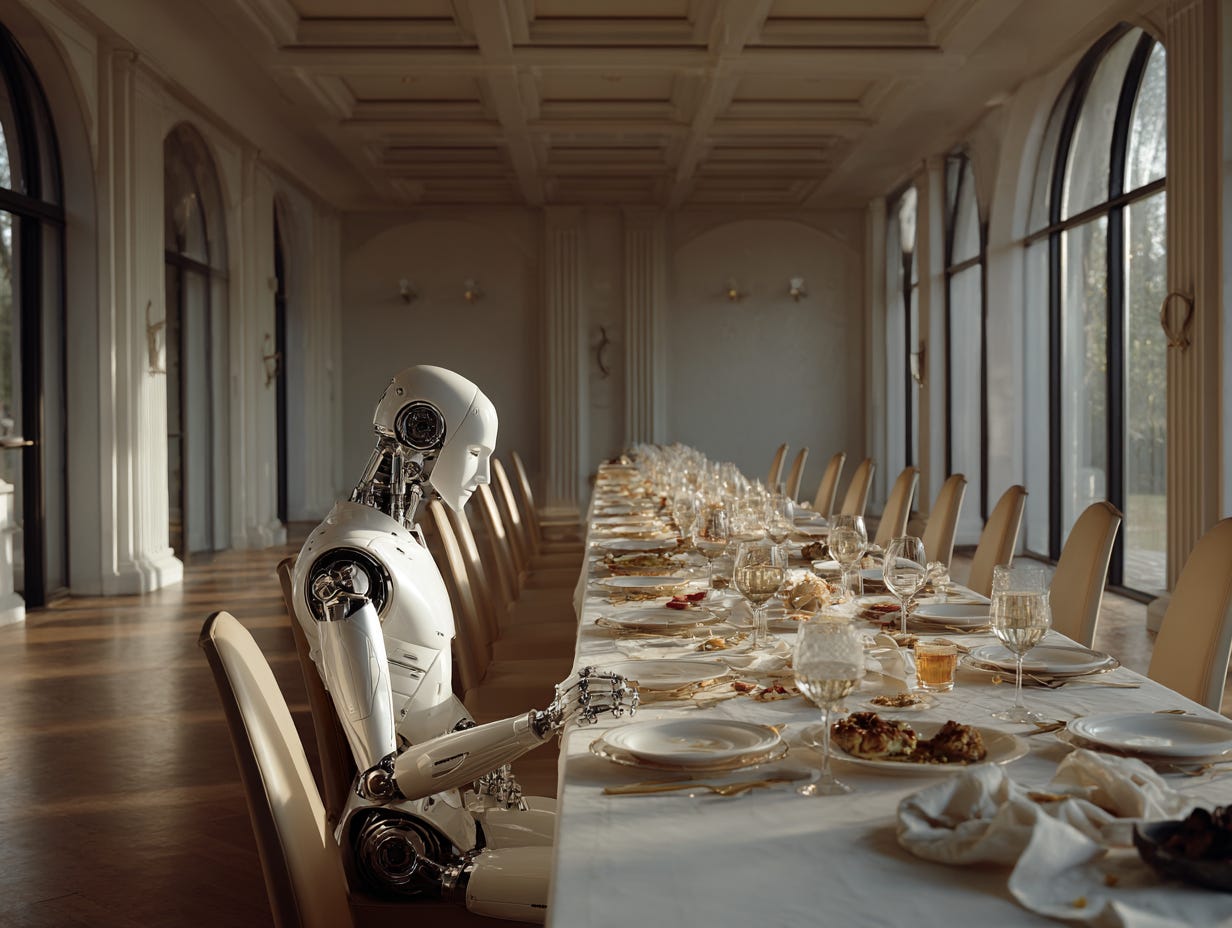
The fundamental mistake tech bros make
Mark Zuckerberg’s superyacht pulled into Seattle the same week Meta announced its latest cuts. ClickUp CEO Zeb Evans laid off 22% of the firm while declaring that AI is “enabling 10x engineers to become 100x.” In 2026, you can’t be hardcore enough.

Zuck’s building-dwarfing superyacht comes to Seattle
“Performance culture” is the phrase of the year. Nestle’s new CEO put it bluntly: “We will be ruthless in assessing our talent, our people.” Mix in AI, and it gets worse. When you describe your workforce as “lower-value human capital” or a “human assembly line,” as I noted to Bloomberg’s Matt Boyle, you tell employees exactly where they stand. The honesty is almost refreshing.
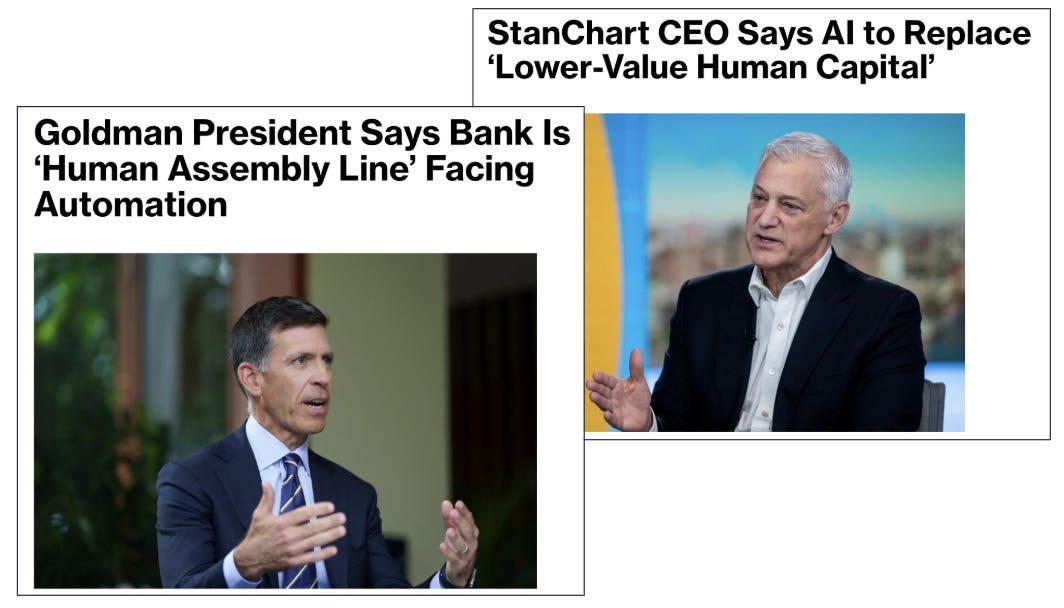
When 80% of CEOs say their jobs are at risk if they don’t show AI progress this year, don’t be surprised when they grab for short-term cost levers. Their boards might be less pleased: CNBC found that following AI-linked layoffs at 23 S&P 500 firms, 56% have traded in the red.
Many of these CEOs do see people as replaceable: employees as NPCs in their enterprise. What they miss is that humans are their differentiation.
What gets discounted away
Van Jones nailed it: as AI capabilities commoditize, human talent becomes the only remaining differentiator. The mechanism, in Dan Shipper’s words: AI is trained on the residue of human competence. It packages everything that’s already been done (every PR review, support ticket, product spec, marketing brief) and makes it cheaply available to anyone. Yesterday’s expertise gets commoditized overnight.
When everyone has access to the same models, the default output starts to look the same everywhere. Good stuff, bad stuff, slop, repeated ad nauseam.
What becomes valuable is what requires human involvement: judgment, taste, a point of view, a context-based read on what this customer or this moment actually needs. All of it requires humans, at least if you’d rather not be a commodity.
We’re still in for a massive transition. The more rote the job, the more likely it’s automated: basic customer service, entry-level accounting. Shipper’s larger point:
“AI does not eliminate expert human knowledge work. It dramatically increases the volume of work being done, and none of that work is differentiated or valuable unless a human being is involved.”
Agents need human oversight, expertise, and maintenance to function; ask anyone who’s built one how well it works without proper care.
More fundamentally, there’s always more work. Put efficiency gains into headcount reductions and you get the same output. Put them into doing more, and you pull ahead. Robert Half says 30% of firms are already rehiring positions they cut.
BCG’s research puts a finer point on it: cut before you understand what transformation looks like, and you lose institutional knowledge and engagement. Copying another company’s layoffs is playing follow-the-lemming.
The leadership premium
Here’s what productivity doesn’t look like:
“The chats in my network are like, ‘When is that sword going to cut my head off?’ in a jokey but not-so-jokey kind of way. That’s pretty much talked about constantly.”
That’s from Coqual and Catalyst’s research, surveying ~3k leaders and employees across France, Germany, and the UK. Only 16% of employees say their leaders remain confident and supportive during AI-driven change.
What does confident, supportive leadership look like? The researchers describe “convergent leaders” — those with AI fluency, inclusive behaviors, and a flexible mindset. Only 37% of leaders have that combination, but they’re getting better results: 93% of their teams report productivity gains over the last 18 months, versus 34% for the rest.
Most tellingly, 45% launched innovative new products versus 18% overall. Most AI transformation efforts so far are really just automation: racing to do the same thing faster. Meanwhile, someone’s out there reinventing your category without you in it.
Innovation requires trust. Trust requires that I don’t think there’s a sword swinging through the org capriciously.
🔆 Special Offer 🔆
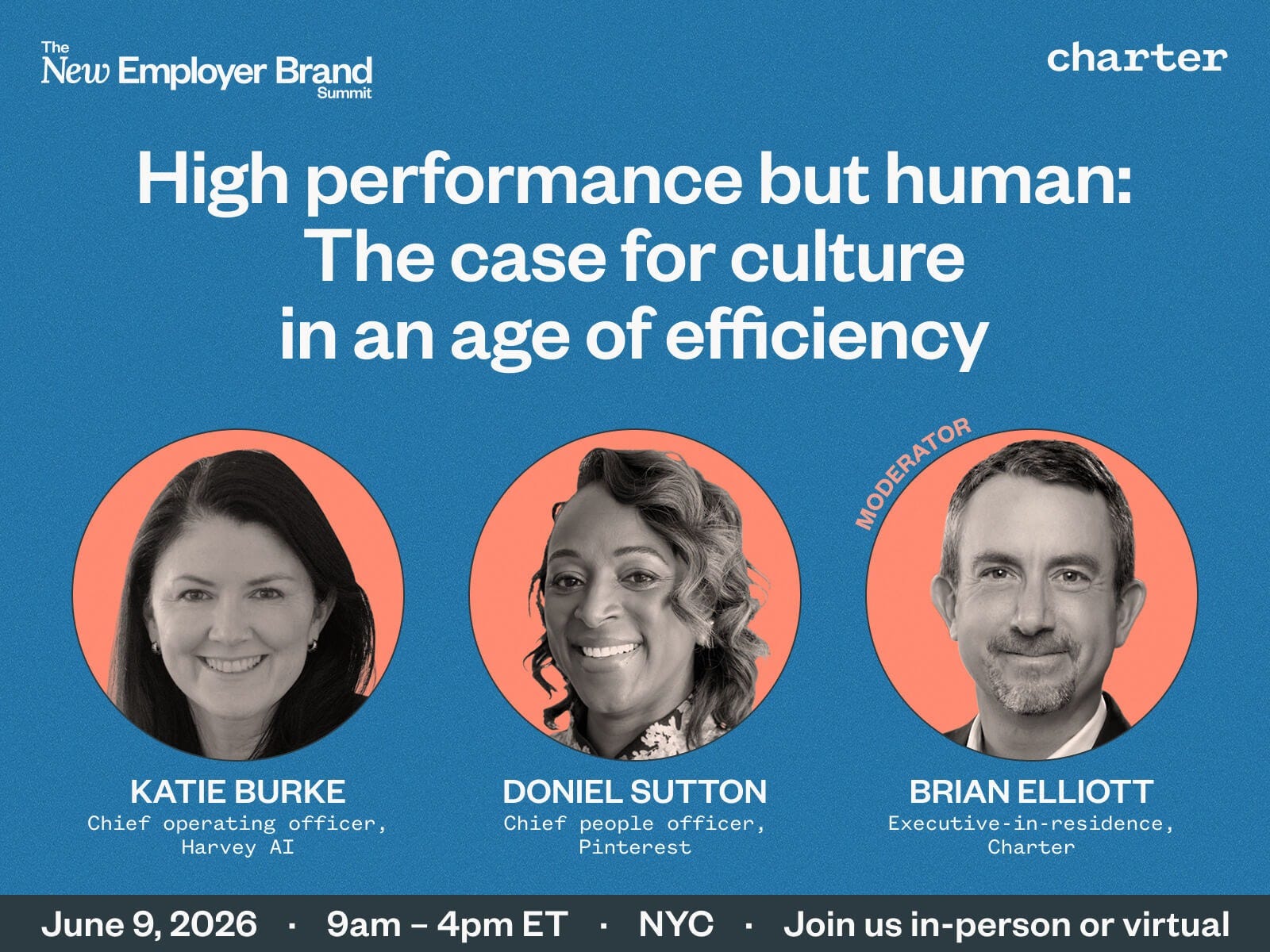
How do you design culture, leadership, and trust in this environment? That’s what we’re digging into at Charter’s New Employer Brand Summit on June 9. I’ll be moderating a conversation Katie Burke, COO at AI-native Harvey, and Doniel Sutton, CPO at Pinterest. The rest of the lineup is equally stellar!
50% off in-person registration with code BRAND (registration requires approval). Online registration is free.
Three pillars for AI-era leadership
Culture is the variable that drives outcomes, not technology. How you lead will determine where you land.
1. Motivation over monitoring
People don’t deliver discretionary effort because of dashboards and stack-rankings. They deliver it because the work matters, they’re getting better at it, and they have room to make decisions. Daniel Pink’s old framework — autonomy, mastery, purpose — has never been more relevant.
The fastest way to destroy all three: stack a usage mandate on a layoff threat. The fastest way to build them: give people real problems and the autonomy to solve them.
Pope Leo’s encyclical earns its place here. His framing of work as “a requirement of the human condition, a normal path toward maturity, development and personal fulfillment” is the intrinsic motivation argument from a different angle. People don’t want UBI, although they might need it. What they want is meaningful work.
2. Curiosity over certainty
Thinking of AI transformation as something that comes out of a playbook is dead wrong. The leaders I’ve seen get ahead are continually iterating, running experiments that break the frame of normal operating mode.
Atlassian’s Molly Sands shared a recent example: roughly twenty of their software pods were deliberately untethered from normal constraints and given stretch goals (ex., deliver in half the time or without a single line of manually written code) starting with low-risk projects. The result, per Sands: those “frontier teams’” ways of working are now “a million times” different from teams still doing the occasional AI day.
Necessity is the mother of invention. Real work with hard constraints beats magic-time thinking on AI training modules. So does a leader willing to say, out loud, “I don’t have all the answers. Here’s what we’re going to try, and here’s how we’ll know if it works.”
3. Accountability over activity
Human-centered isn’t the same as soft. The leaders who get this right hold everyone to clear outcomes, and they hold everyone to them. When the bar is uneven, your highest performers check out, then update their LinkedIn.
I lived through a version of this at a past employer whose performance management infrastructure made it nearly impossible to move under-performers out. Going through the process wasn’t just time consuming, the message was “can’t we just move them to another team?” The signal that sends to everyone carrying load: the bar isn’t real. When leadership later announced we needed to move faster, the cultural infrastructure to back it up wasn’t there.
The combination that works: shared outcomes, transparency about where we’re delivering and where we’re not, and consequences when people don’t deliver for their teammates. That’s what makes human-centered leadership credible.
Three things to do next
Think before you cut. The individual speed-ups are real. The strategic question is how to invest them into work your competitors can’t copy, and how to do it in ways that sustain quality and engagement.
Hire AI-native juniors. The companies most aggressive on AI are nearly three times more likely to grow entry-level headcount than cut it. Several firms have already reversed course, recognizing that AI-native new blood mixed with experienced staff is a powerful combination.
Lead by the three pillars. Leaders who instill motivation, reward curiosity, and ensure accountability outrun those reaching for carrots and sticks. Harder work, more valuable than ever.
If only 16% of your leaders are capable of driving change, start there. Be the leader who can stand in front of a team in real uncertainty and say “I don’t know everything, but here’s what we’re going to try and how we’ll know if it’s working.”
Competitive advantage in the next two to three years will come down to whether leaders figure out that engaged, talented humans are the key, not the cost.
Wishful thinking on my part? Let me know what you think!
Recommended reading
Every CEO Dan Shipper’s After Automation post is a must-read: AI progress creates more work for humans, not less. Rather listen? Check out his interview with Lenny Rachitsky.
Matt Boyle at Bloomberg says CEOs Are Getting Ruthless About Worker Performance (that’s a gift link, so have at it!)
This is great. I think the secret here to building taste, judgement, and curiosity is making people feel confident they can build it. We are increasingly in a world where we are making our workers more anxious and not giving them the tools to learn how to deal with that. We can’t inspire creativity if everyone is running around in a fear state.
I was just in a room full of nonprofit leaders in DC grappling with this exact question yesterday, and what struck me most was how much energy we spent asking what AI can do and how little time we spent asking who we are when we use it.
Tools are tools. A hammer builds a home and breaks a window. AI is no different. What determines the outcome isn't the tool; it's the judgment, empathy, curiosity, and critical thinking of the person holding it. Garbage in, garbage out, as they say. It turns out this isn't just a tech warning, but also a human leadership warning.
What worries me most about the "move fast and break things" era isn't the speed. It's the things we're breaking, especially the people. I've been thinking a lot lately about a different frame: move with purpose and build things that last. Not slower, necessarily, but with the kind of intentionality that actually creates the human differentiation you're describing. Because you're right that AI is training on the residue of human competence. Which means that human judgment and values may be the only things that won't be commoditized.
The leaders worth following right now aren't the ones moving fastest. They're the ones moving with clarity and intentionality about how they are using the tools, what they're building with the tools, and who they're building it with.